
Tarantula Care Guide for Beginners
Enclosure setup, humidity, feeding schedule, and safe handling for pet Tarantulas — low-maintenance exotic pets with huge visual impact.
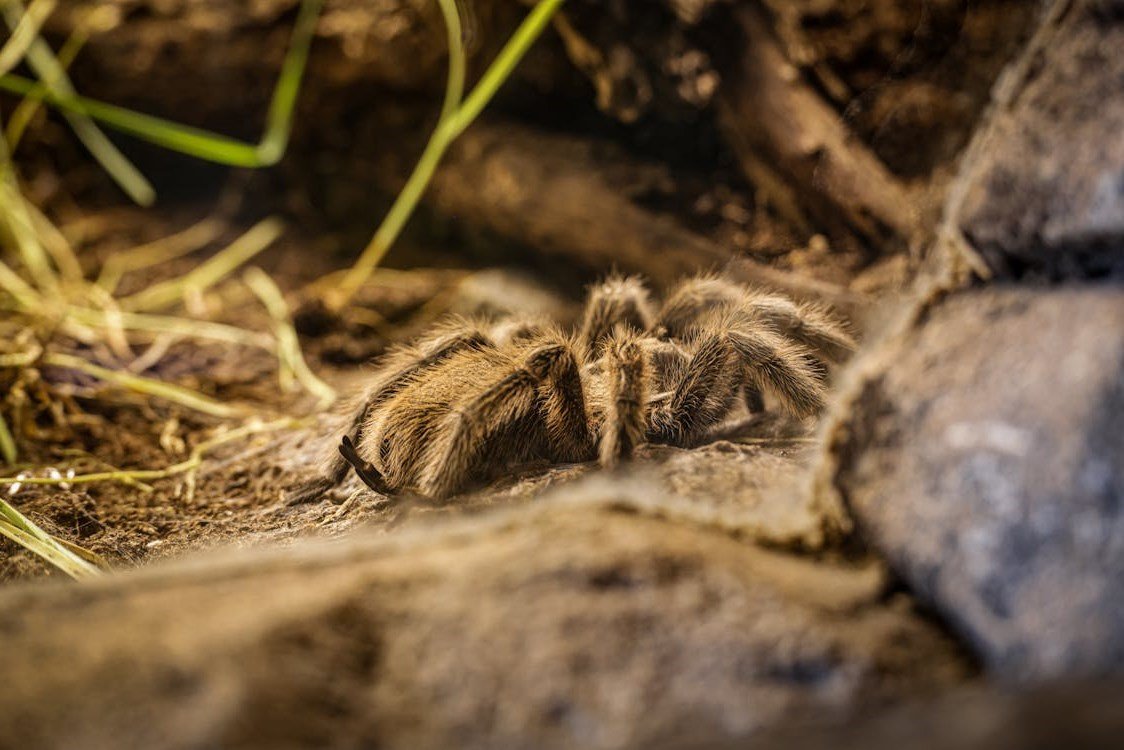
Overview
Tarantulas are one of the most low-maintenance exotic pets you can own. They do not need daily feeding. They do not need social interaction. They do not need special lighting. They just need a correct enclosure, the right temperature and humidity, and a prey insect every 1–2 weeks.
Over 900 species of tarantula exist worldwide. For beginners, a handful of calm, hardy species are recommended:
- Grammostola pulchripes (Chaco Golden Knee) — the calmest and most forgiving beginner tarantula
- Brachypelma hamorii (Mexican Red Knee) — beautiful and slow-moving
- Aphonopelma chalcodes (Arizona Blonde) — very docile
Female tarantulas of these species can live 20–30 years.
Habitat & Housing
The enclosure size depends on the tarantula’s size and type.
| Type | Setup |
|---|---|
| Terrestrial (most beginner species) | Floor space 3–4× leg span, 3–4 inches deep substrate, surface hide |
| Fossorial (burrowers) | Deep substrate (6–8 inches), minimal decoration |
| Arboreal (tree-dwellers) | Tall enclosure, cork bark tubes |
For most beginner species (terrestrial), a plastic container or glass enclosure works well. Make sure it has ventilation on two sides (cross-ventilation), not just the top.
Keep room temperature at 70–80°F. Most beginner species do fine at normal room temperature. Never use a heat mat under a tarantula enclosure — it overheats the substrate where the spider rests.
Give each tarantula a cork bark hide to feel secure.
Provide a small, shallow water dish. Even desert species need access to water. For tiny spiderlings, lightly mist one corner of the enclosure once a week instead of a dish.
Diet & Feeding
Tarantulas eat live prey. Movement triggers their hunting instinct.
Best prey items:
- Dubia roaches — excellent nutrition; easy to keep
- Crickets — widely available; remove them after 24 hours if not eaten (they can bite a resting tarantula)
- Mealworms (pre-killed) — acceptable occasional treat
Prey size: no larger than the width of the tarantula’s abdomen.
| Age | Feeding Frequency |
|---|---|
| Spiderling (under 1 inch) | Every 4–7 days |
| Juvenile (1–3 inches) | Every 7–10 days |
| Adult | Every 10–14 days |
Before molting, tarantulas stop eating. This can be weeks or even months before the molt. Remove any live prey when the tarantula refuses food. Never disturb a molting tarantula.
Health & Common Issues
A healthy tarantula has a plump, rounded abdomen. A shriveled, raisin-like abdomen means the spider is dehydrated.
Dehydration: offer fresh water and lightly mist one corner of the substrate.
Failed molt: tarantula gets stuck in old skin. This is usually caused by too-low humidity. Increase humidity and provide experienced help if needed.
The long fast: Grammostola species routinely refuse food for 6–12+ months for no apparent reason. As long as the abdomen is plump and not shriveled, the spider is fine. Offer food every 2–3 weeks, and wait.
Handling & Temperament
For docile beginner species, brief handling is possible. For defensive species, it is unnecessary stress for the spider.
If you handle:
- Move slowly and close to a soft surface
- Let the spider walk between your hands — do not grab it
- Be careful of urticating hairs — New World species flick tiny barbed hairs when threatened. These cause intense itching. Keep the spider away from your face.
- Never handle during or just after a molt (skin is soft and vulnerable)
Cost & Commitment
| Item | Cost |
|---|---|
| Beginner tarantula | $20–$60 |
| Enclosure + substrate | $20–$60 |
| Monthly insects | $5–$15 |
No routine vet care is needed. Tarantulas are one of the lowest-cost exotic pets to maintain.
Lifespan: Female Grammostola/Brachypelma live 20–30 years. Males live 3–7 years.
Frequently Asked Questions
Are Tarantulas dangerous?
Most beginner tarantulas (Grammostola, Brachypelma) have venom similar to a bee sting. Old-world species like Poecilotheria have medically significant venom and are not for beginners. Always research before acquiring.
My Tarantula hasn’t eaten in months — is it dying?
Probably not. Chilean Rose and Chaco Golden Knee tarantulas can fast for 6–12+ months. Check that the abdomen is plump and not shriveled. A full-looking abdomen means the spider has energy reserves and is fine.
Can I keep multiple Tarantulas together?
No. Tarantulas are solitary and cannibalistic. They will eat each other if housed together. Each tarantula needs its own separate enclosure.
How do I know when my Tarantula is about to molt?
Signs: abdomen darkens, spider stops eating, becomes sluggish, may flip onto its back. Never disturb a molting tarantula — this is a vulnerable process that takes several hours.