
Hamster Care Guide for Beginners
Cage size, enrichment, and nutrition for a happy, healthy hamster — including why most pet store cages are dangerously small.
Overview
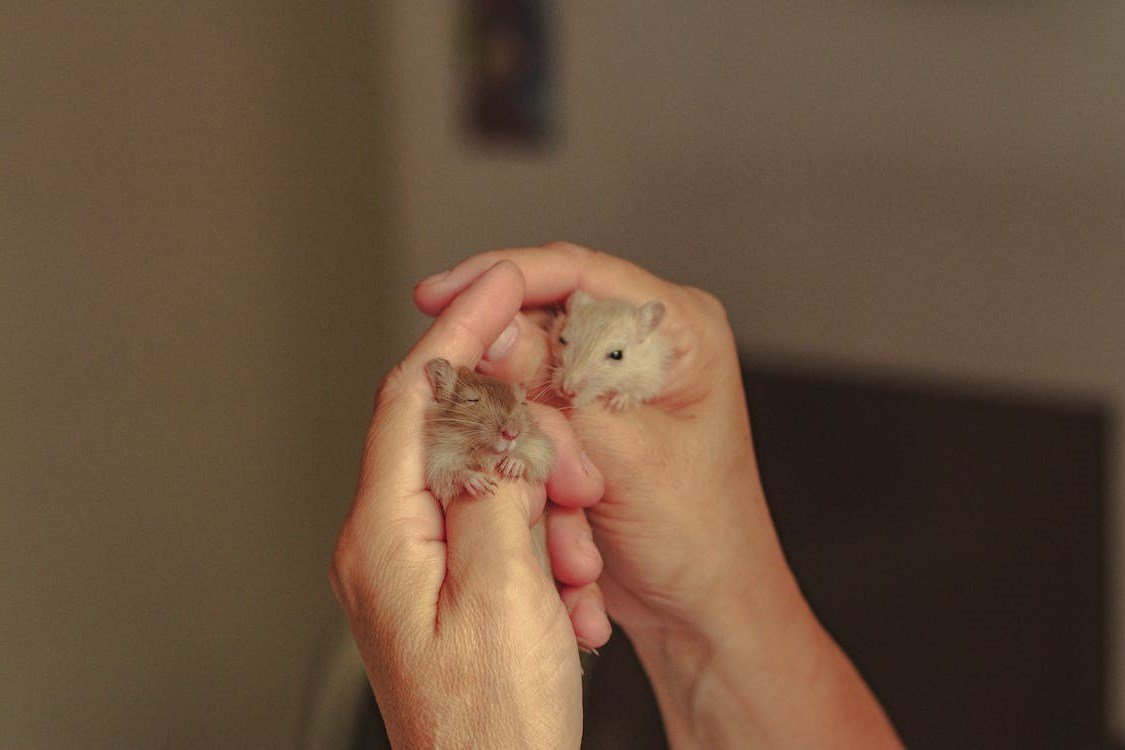
Hamsters are small, fluffy animals that are very popular pets. The most common kind is the Syrian Hamster, also called the Golden Hamster. They are cute, curious, and fun to watch.
In the wild, hamsters run up to 8 miles every single night. This means they need a lot of space and a big wheel in their cage. Most cages sold in pet stores are way too small.
Hamsters sleep during the day and wake up in the evening. Never wake your hamster up during the day. It will be grumpy and may bite.
Habitat & Housing
The cage must be big enough. Most pet store cages are far too small. Here is what your hamster actually needs:
- Syrian Hamster: at least 40 × 20 inches of floor space
- Dwarf Hamsters: at least 30 × 15 inches
A large plastic storage bin with a mesh lid works great. A big glass aquarium also works well. These are much better (and often cheaper) than most pet store cages.
Bedding depth is very important. Hamsters must be able to burrow. Give at least 6 inches of soft bedding like paper-based bedding (Carefresh is a good brand). Burrowing is not just fun for hamsters — it is a need.
Your hamster needs a solid-surface wheel that is at least 11 inches across for Syrians. Wire wheels hurt their feet and back. Running every night is essential for your hamster’s health.
Keep the room between 65–75°F. If it gets too cold, your hamster may go into a torpor — it will look dead but is just very cold. Warm it up slowly in your hands.
Diet & Feeding
Hamsters eat seeds, grains, and protein. Feed a good-quality hamster seed mix as the main food. Look for one that is not mostly sugary pieces that your hamster will pick around.
Good seed mixes include Higgins Sunburst or Supreme Science Selective. Give a small amount — about one tablespoon per day. Remove old food before adding new food.
Fresh foods to add a few times a week:
- Vegetables: broccoli, carrot, courgette, cucumber
- Protein: cooked chicken, dried mealworms, hard-boiled egg (small amounts)
- Fruit: tiny piece of apple or blueberry (limit — too much sugar is bad)
Do not feed: citrus, onion, garlic, raw potato, chocolate, or anything with artificial sweeteners.
Always have fresh water available. A water bottle works well. Check it every day to make sure it is working.
Health & Common Issues
A healthy hamster is active at night, eating normally, and burrowing. Its eyes are bright and its coat is clean.
Wet Tail is a very serious illness. It causes severe, watery diarrhea in young hamsters. It can kill within 24–48 hours. See a vet immediately if you notice this.
Diabetes is common in Dwarf Hamsters. Too much sugar in the diet is the cause. Keep treats rare and avoid sugary foods.
Torpor looks like death. The hamster is cold and barely moving. It happens when the room gets too cold. Warm the hamster gently and keep the room warmer going forward.
Handling & Temperament
Always handle your hamster in the evening when it is naturally awake. Never wake it up from sleep to play — this causes real stress and biting.
Let your hamster sniff your hand first. Then scoop it up from below — do not grab from above. Reaching from above feels like a hawk attack to your hamster.
Be patient when building trust. Some hamsters warm up in a few days. Others take a few weeks. Consistent, gentle handling every evening is the key.
Syrian Hamsters must always live alone. Two Syrians will fight, even if they grew up together.
Cost & Commitment
| Item | Cost |
|---|---|
| Hamster | $10–$30 |
| Large bin cage or 40-gal tank | $30–$80 |
| 11-inch solid wheel | $15–$35 |
| Monthly bedding + food | $20–$40 |
Hamsters live 2–3 years. They are a short but sweet commitment. They need daily food, water, and evening interaction.
Frequently Asked Questions
Can two Syrian Hamsters live together?
No. Syrian hamsters must live alone, always. They will fight to the death if kept together. Even hamsters that seem friendly will eventually attack each other.
Is my hamster dead or just cold?
If your hamster is cold and barely moving but does not smell bad, it is probably in torpor. Warm it in your cupped hands for 30–60 minutes. If it does not wake up, see a vet.
How often should I clean the cage?
Spot-clean the wet spots every day. Do a full clean every 3–4 weeks. Save some old bedding to put back in so your hamster keeps its familiar scent.
What size wheel does a Syrian Hamster need?
At least 11 inches in diameter. A smaller wheel makes hamsters run with a curved back, which causes spinal problems over time.