
Guppy Care Guide for Beginners
Easy community fish: tank setup, water parameters, breeding control, and feeding for colorful, hardy Guppies — a perfect beginner fish.
Overview
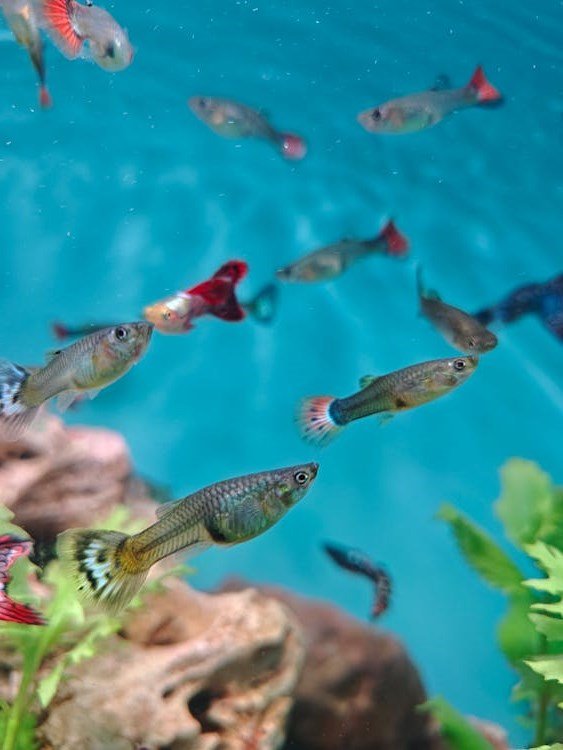
Guppies are the most widely kept freshwater fish in the world. They are colorful, peaceful, and very easy to care for. Males are small (about 1–1.5 inches) and have spectacular tails in every color imaginable.
Guppies are livebearers. Females give birth to live baby fish instead of laying eggs. One female can have 20–80 babies every 4–6 weeks. This means you need a plan for population control if you keep males and females together.
They are one of the best fish for beginners. Hardy, active, and beautiful.
Habitat & Housing
A 10-gallon tank is the minimum for a small group. A 20-gallon tank is much better and allows for more interesting social behavior.
Water temperature: 72–82°F. Use a reliable heater. Temperature swings make guppies sick.
Filtration: Use a sponge filter or a gentle hang-on-back filter. Strong currents tire out guppies with long fins. Cover filter intakes with a sponge pre-filter — baby guppies get sucked in.
| Parameter | Target |
|---|---|
| pH | 7.0–7.8 |
| Ammonia | 0 ppm |
| Nitrite | 0 ppm |
| Nitrate | Under 20 ppm |
Add live plants if you can. Java moss, hornwort, and guppy grass give fry somewhere to hide. They also help keep nitrates lower.
Diet & Feeding
Guppies are omnivores and eat almost anything. Variety keeps them healthy and colorful.
Best foods:
- High-quality micro pellets or small tropical flakes
- Baby brine shrimp (live or frozen) — excellent for fry and adults
- Frozen daphnia and bloodworms — great treats
- Spirulina flakes — improves color and immune health
Feed 2–3 times daily. Only give what they can eat in 2 minutes. Remove uneaten food right away.
For baby guppies: crushed flakes or fry powder plus baby brine shrimp give the best growth and survival rates.
Health & Common Issues
Healthy guppies have vivid colors, active swimming, and males displaying their fins constantly.
Fin rot causes ragged, milky fin edges. It is caused by poor water quality. Improve water changes and treat with antibacterial medication if needed.
Ich causes white spots and scratching. Treat with ich medication and raise the temperature to 82°F.
Wasting disease causes guppies to get thin despite eating. This is often caused by internal parasites. Treat with an antiparasitic medication.
Handling & Temperament
Guppies cannot be handled, but they are endlessly entertaining to watch. Males constantly show off their fins for each other and for females.
Keep the ratio of 2–3 females per male. Without enough females, males will stress a single female to death.
Good tankmates: ember tetras, small cory catfish, snails, and Otocinclus. Avoid fin-nipping fish like tiger barbs.
Cost & Commitment
| Item | Cost |
|---|---|
| 6–8 guppies | $10–$40 |
| 20-gallon tank + filter + heater | $80–$150 |
| Monthly food | $5–$10 |
Guppies live 1.5–3 years. A well-kept colony will replenish itself through breeding. They are low-cost and very rewarding to keep.
Frequently Asked Questions
How do I stop guppies from over-breeding?
Keep only males for a colorful display tank with no breeding. In mixed tanks, separate pregnant females or provide very dense planting so most fry survive unseen.
How can I tell if a guppy is pregnant?
Look for a dark “gravid spot” near the back of the belly. As birth approaches, the belly becomes very large and boxy. Gestation takes 28–35 days.
Can guppies live with betta fish?
Sometimes. Some bettas ignore guppies; others attack their colorful tails. Try it in a well-planted 20+ gallon tank and watch closely.
Why are my guppies dying?
Test ammonia and nitrite first — toxicity is the most common cause. Also check temperature stability, and make sure you are not overfeeding.