
Corn Snake Care Guide for Beginners
Corn snake care for beginners: enclosure setup, temperature gradient, frozen-thawed feeding, and why this is the ideal starter snake.
Overview
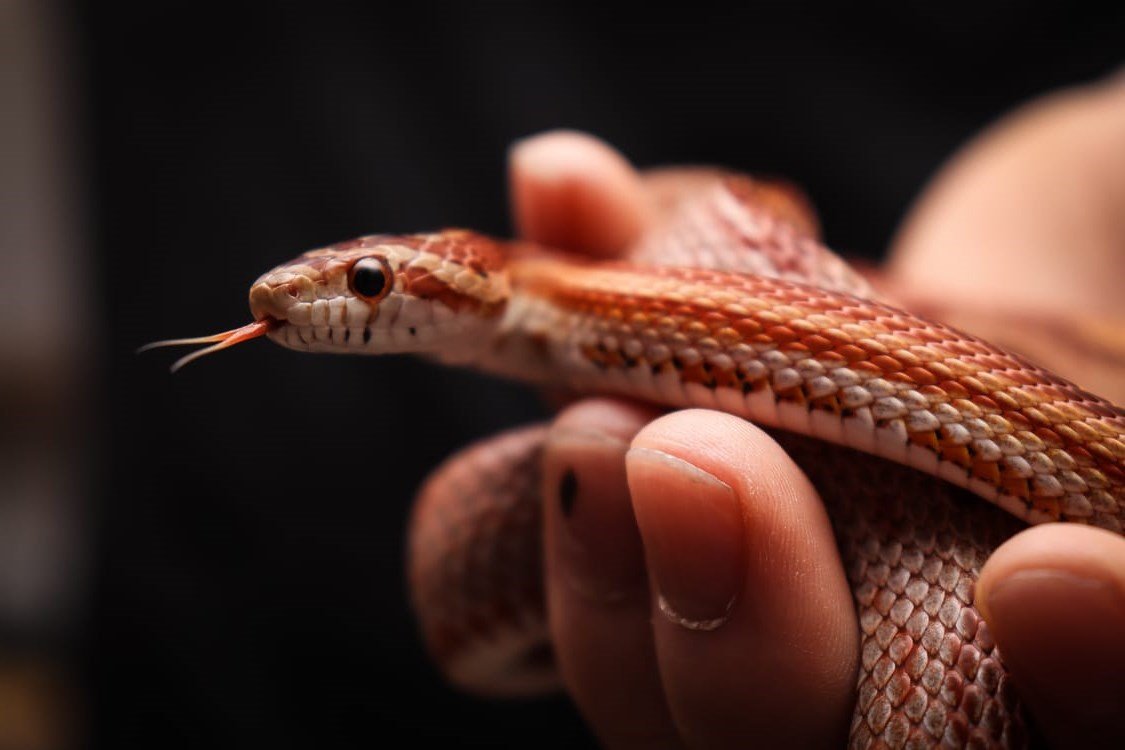
The Corn Snake is often called the best beginner snake — and it truly earns that title. These snakes from the southeastern United States are slim, colorful, and very easy to handle. They almost never bite.
Corn snakes grow to about 4–5 feet long. They live for 15–20 years. They come in hundreds of beautiful color patterns, from orange and red to lavender and white.
They are curious and active snakes that love to explore. They are much easier to feed than ball pythons and rarely go on hunger strikes.
Habitat & Housing
Young corn snakes need a 20-gallon tank. Adults need at least a 40-gallon tank. Corn snakes are active and enjoy having room to move.
Corn snakes are excellent escape artists. Make sure the lid locks securely. Even a tiny gap is enough for them to get out.
| Zone | Temperature |
|---|---|
| Warm side | 82–86°F |
| Cool side | 72–76°F |
| Night minimum | 65°F |
Use an under-tank heater on the warm side with a thermostat. Corn snakes do fine at slightly cooler temperatures than ball pythons.
Keep humidity around 40–60%. A moist hide with damp moss helps with shedding. Aspen shavings make great bedding — they are cheap, safe, and easy to clean.
Never use pine or cedar bedding. The oils in these woods are toxic to snakes.
Diet & Feeding
Corn snakes are easy feeders. They almost always eat when offered food. Always use frozen-thawed mice — never feed live prey.
| Snake Size | Prey |
|---|---|
| Baby | Pinky mouse |
| Juvenile (12–18 in) | Fuzzy or hopper mouse |
| Adult | Large mouse or small rat |
Thaw the prey in warm water until it is fully warm. Offer it with feeding tongs. Feed babies every 5–7 days. Feed adults every 7–10 days.
Corn snakes naturally eat less in winter. This is called brumation. A reduced appetite from October to February is completely normal.
Health & Common Issues
A healthy corn snake has smooth scales, clear eyes, and eats regularly. After a shed, check that all the skin came off — including the eye caps.
Stuck shed is common when humidity is too low. Soak your snake in warm water for 20–30 minutes. Keep a moist hide in the enclosure to prevent it from happening.
Respiratory infections cause wheezing and mucus. They happen when the tank is too cold or damp. A vet visit and antibiotics are needed.
Regurgitation happens when a snake throws up its meal. Wait 48 hours after feeding before handling. Make sure the prey is not too large and the tank is warm enough.
Handling & Temperament
Corn snakes are among the most pleasant snakes to hold. They are calm, rarely bite, and become very relaxed with regular handling. Young snakes may be a little nervous at first.
Handle your corn snake 3–4 times a week for 10–20 minutes. Always wait 48 hours after a meal before handling. Do not handle during shed (when the eyes look blue and cloudy).
Support the full body at all times. Let the snake move freely between your hands. Corn snakes love to explore and will weave between your fingers.
Cost & Commitment
| Item | Cost |
|---|---|
| Corn snake (captive-bred) | $30–$80 |
| 40-gallon tank + lid | $80–$150 |
| Under-tank heater + thermostat | $30–$60 |
| Monthly feeders | $8–$15 |
Corn snakes live 15–20 years. They are low-cost to maintain and very rewarding. They are an excellent choice for anyone new to snake keeping.
Frequently Asked Questions
Are Corn Snakes venomous?
No. Corn snakes are completely harmless to humans. They are non-venomous constrictors. Even a rare defensive bite from a hatchling is just a tiny scratch.
How often do Corn Snakes shed?
Young snakes shed every 4–6 weeks. Adults shed every 2–4 months. Eyes turn dull and cloudy 1–2 weeks before a shed. Keep the moist hide stocked during this time.
Do Corn Snakes need UVB lighting?
They do not strictly require it, but a low-level UVB light can improve their long-term health. It is beneficial but not essential for basic care.
Can Corn Snakes live together?
No — keep them in separate tanks. Feeding competition and stress are real problems when snakes are housed together.