
Jumping Spider Care Guide for Beginners
Small enclosure, live insect feeding, and care tips for charismatic Jumping Spiders — the most personable spiders in the pet trade.
Overview
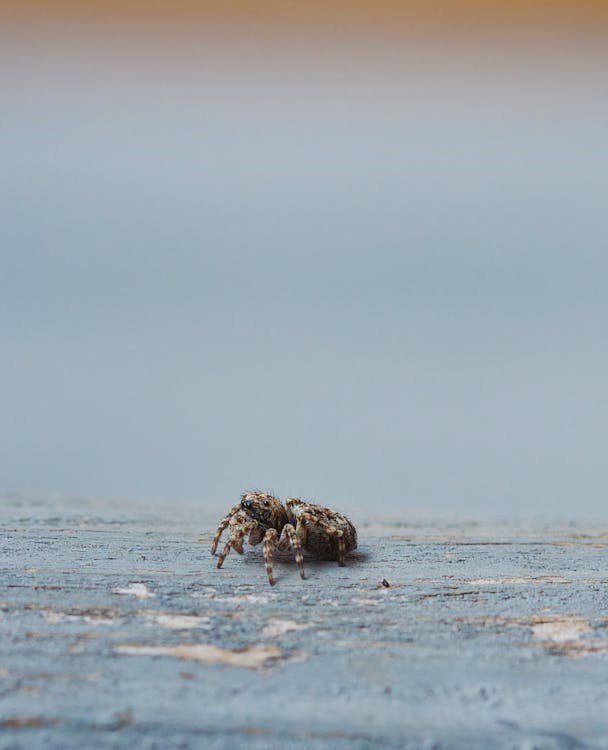
Jumping Spiders are the friendliest spiders in the world. Unlike most spiders that hide from humans, jumping spiders often turn to look at you, tilt their tiny heads, and seem genuinely curious about who you are.
They have eight eyes, including two enormous forward-facing eyes that give them excellent vision. They are small (most pet species have a body around 1/2 inch), completely harmless to humans, and surprisingly easy to keep.
The most popular pet species are Phidippus regius (the Regal Jumping Spider) and Phidippus audax (the Bold Jumping Spider). Females live 2–3 years; males live 1–1.5 years.
Habitat & Housing
Jumping spiders need a tall enclosure, not a wide one. They build their silk retreats at the top of the enclosure and hunt by jumping down onto prey.
| Spider Size | Enclosure |
|---|---|
| Tiny spiderling | Small deli cup (4–8 oz) with ventilation holes |
| Juvenile | 4 × 4 × 8 inch tall container |
| Adult | 8 × 8 × 12 inch minimum |
Ventilation is very important. Use cross-ventilation (mesh on the side plus mesh on the top) to keep air moving. Stagnant air causes mold and health problems.
Add a piece of cork bark or a fake plant for anchor points. The spider will build a silk sleeping hammock at the very top of the enclosure. Leave the top clear to accommodate this.
Temperature: 72–80°F room temperature is fine. No special heating needed for most species.
Humidity: Moderate. Mist one side of the enclosure lightly 2–3 times a week. Let the other side dry completely between mistings. Never have standing water.
Diet & Feeding
Jumping spiders are visual hunters. They eat live prey only — movement is what triggers them to hunt.
Best prey:
- Fruit flies (Drosophila) — essential for spiderlings and small juveniles; sold as live cultures
- Small crickets — for adult-sized spiders only
- Small roaches — excellent nutrition
- Bottle flies — great for adults
Prey size: roughly the same as the spider’s abdomen.
| Age | Feeding Frequency |
|---|---|
| Spiderling | Every 2–3 days |
| Juvenile | Every 3–4 days |
| Adult | Every 4–7 days |
Offer 1–2 prey items per feeding. Remove anything not eaten within 24 hours.
Pre-molt: When the spider seals itself in its retreat with thick silk, it is about to molt. Remove all live prey. Do not disturb the retreat. The spider will resume eating 5–7 days after molting.
Health & Common Issues
A healthy jumping spider is alert, with clear shining eyes. It actively investigates movement and accepts prey readily.
Dehydration: the abdomen looks shrunken and raisin-like. Mist more frequently and make sure water droplets are available for the spider to drink.
Failed molt: legs stuck in old skin. Caused by low humidity or a too-small enclosure. Provide adequate humidity and upgrade the enclosure as the spider grows.
Mold: visible growth in the enclosure. Remove uneaten food promptly, improve ventilation, and reduce misting.
Handling & Temperament
Jumping spiders are the most handleable spiders you can own. They will often walk toward a hand rather than away from it.
- Let the spider walk onto your hand voluntarily — never grab it
- Handle near a soft surface close to the ground
- They may jump — be ready for this
- Their jaws are too small to break human skin for most common species
Females are generally calmer and more handleable than males.
Cost & Commitment
| Item | Cost |
|---|---|
| Jumping spider | Free (catch locally) or $20–$80 captive-bred |
| Enclosure | $10–$40 |
| Fruit fly cultures (monthly) | $10–$15 |
Female jumping spiders live 2–3 years. They are low-cost pets that need almost no ongoing expense.
Frequently Asked Questions
Are Jumping Spiders venomous?
All spiders have venom. But jumping spider venom is completely harmless to humans. Their jaws usually cannot even break human skin. They are considered fully safe.
Can I catch a wild Jumping Spider to keep as a pet?
Yes. Wild jumping spiders adapt very well to captivity. They are some of the easiest spiders to transition from wild to captive care.
Do Jumping Spiders recognize their owners?
Research suggests they can tell familiar from unfamiliar humans. A spider that has regular positive interactions with a person often shows calmer, more curious behavior toward that specific person.
How do I know if my spider is about to molt?
It will seal itself inside its retreat with thick layers of silk and stop eating. It may do this for 1–2 weeks. Do not disturb the retreat at all during this time.