
Hermit Crab Care Guide for Beginners
Humidity, deep substrate, shell selection, and diet for healthy Hermit Crabs — social invertebrates that need far more than a painted plastic cage.
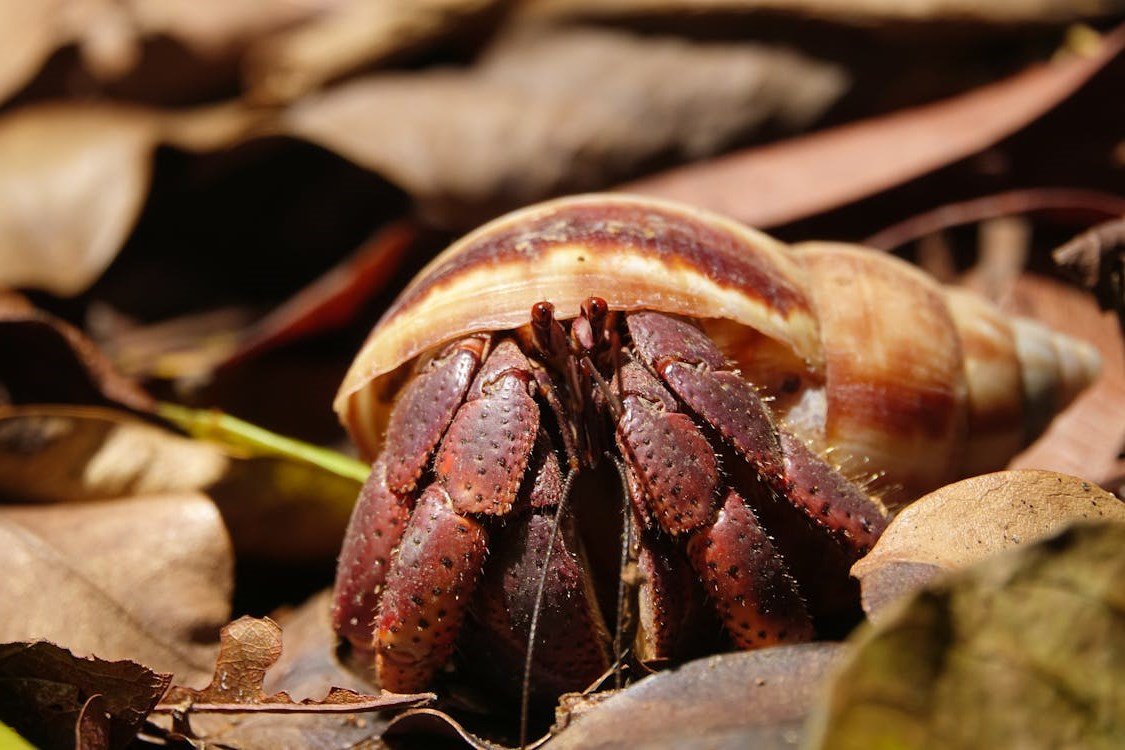
Overview
Land Hermit Crabs look like simple, low-maintenance pets. They are not. Hermit crabs kept in the small plastic cages sold at souvenir shops almost always die within weeks or months. This is entirely due to improper care — not because hermit crabs are fragile.
In the right setup, hermit crabs are fascinating, social, and long-lived animals. They can live for 20–40 years. They change shells as they grow, molt underground, and interact with their companions in interesting ways.
Two crabs is the minimum. They are social animals that need companions to stay healthy.
Habitat & Housing
Tank size: A 10-gallon tank for 2–3 small crabs. A 20–40 gallon for a group.
The most important factor: deep substrate. This is where most hermit crab setups fail.
- Minimum depth: 6 inches (ideally 6× the height of your largest crab)
- Crabs must be able to fully bury themselves underground to molt safely
- A crab that cannot burrow will fail to molt — and that is fatal
Best substrate: A 5:1 mix of playsand and coconut fiber (eco earth), kept slightly moist. Squeeze a handful — it should hold its shape without dripping.
Humidity: 70–80% is essential. Hermit crabs breathe through modified gills that must stay moist. Low humidity slowly suffocates them.
- Use a digital hygrometer and check daily
- A tight-fitting lid (glass or plastic with ventilation slots) maintains humidity far better than a mesh lid
Temperature: 72–82°F. Use a low-wattage heat mat on one side wall (not the bottom — crabs molt underground and can overheat from below).
Two water dishes:
- Freshwater dish — use dechlorinated tap water or spring water
- Saltwater dish — use marine aquarium salt at natural seawater concentration
Never use table salt or iodized salt. These kill hermit crabs.
Shells
Hermit crabs borrow shells from dead snails. They must have access to many extra shells.
- Provide at least 3–5 extra shells per crab in a variety of sizes
- Turbo shells are preferred by most species
- Shell opening size matters most — it should be just slightly larger than the crab’s current opening
- Boil new shells for 10 minutes before offering, then let them dry
Crabs will come out at night to try on new shells. A crab completely out of its shell is either changing shells or molting — do not disturb it.
Diet & Feeding
Hermit crabs are opportunistic omnivores. In the wild, they eat an enormous variety of foods.
Good foods (offer a variety every night):
- Fresh or dried fruit: mango, papaya, coconut, apple, blueberries
- Vegetables: kale, spinach, carrot, sweet potato
- Protein: dried shrimp, cooked unseasoned chicken, hard-boiled egg
- Cuttlebone (calcium — leave in the tank permanently)
- Dried leaves (oak leaves are great foraging substrate)
Avoid: anything with preservatives, copper sulfate (found in some commercial hermit crab food — it is toxic), onion, garlic, and any form of iodized salt.
Replace fresh food every morning to prevent mold.
Health & Common Issues
A healthy hermit crab is active at night, changes shells, forages, and buries itself periodically to molt.
Dehydration/suffocation: lethargic crab that smells bad (decomposition odor). Caused by low humidity. Offer both water dishes and raise humidity immediately.
Failed molt: crab cannot get out of old exoskeleton. Caused by insufficient substrate depth or very low humidity. Prevention — deep moist substrate — is the only solution. Once this happens, it is very difficult to fix.
Handling & Temperament
Hermit crabs can be handled briefly. They may pinch if scared — this is their only defense. Hold them gently and they usually settle.
If a crab latches on: hold it near the water dish. It will let go to drink.
Hermit crabs are more interesting to watch than to hold. Set up a good habitat and observe them foraging, shell-swapping, and interacting with each other at night.
Cost & Commitment
| Item | Cost |
|---|---|
| 2–3 hermit crabs | $5–$20 |
| 20-gallon tank + lid | $50–$100 |
| Substrate (playsand + coco fiber) | $15–$25 |
| Marine salt + water conditioner | $15–$25 |
| Extra shells (variety pack) | $10–$20 |
Hermit crabs live 20–40 years with proper care. The initial setup cost is the main expense.
Frequently Asked Questions
Can I use tap water for hermit crabs?
Dechlorinated tap water (use a fish water conditioner) is fine for the freshwater dish. For saltwater, use marine aquarium salt — never table salt or iodized salt.
My hermit crab has been buried for weeks — is it dead?
It is almost certainly molting. Do not dig it up. Disturbing a molting crab is fatal. Mark the spot. Wait until it emerges on its own — this can take several weeks.
How do I know if a hermit crab is dead?
A dead hermit crab smells strongly of decomposition. A molting crab has no unusual smell. If there is no bad odor and it has been buried less than 3 months, assume it is molting.
Can hermit crabs live alone?
Technically yes, but they are social and do much better with companions. Keeping at least two together is strongly recommended.